























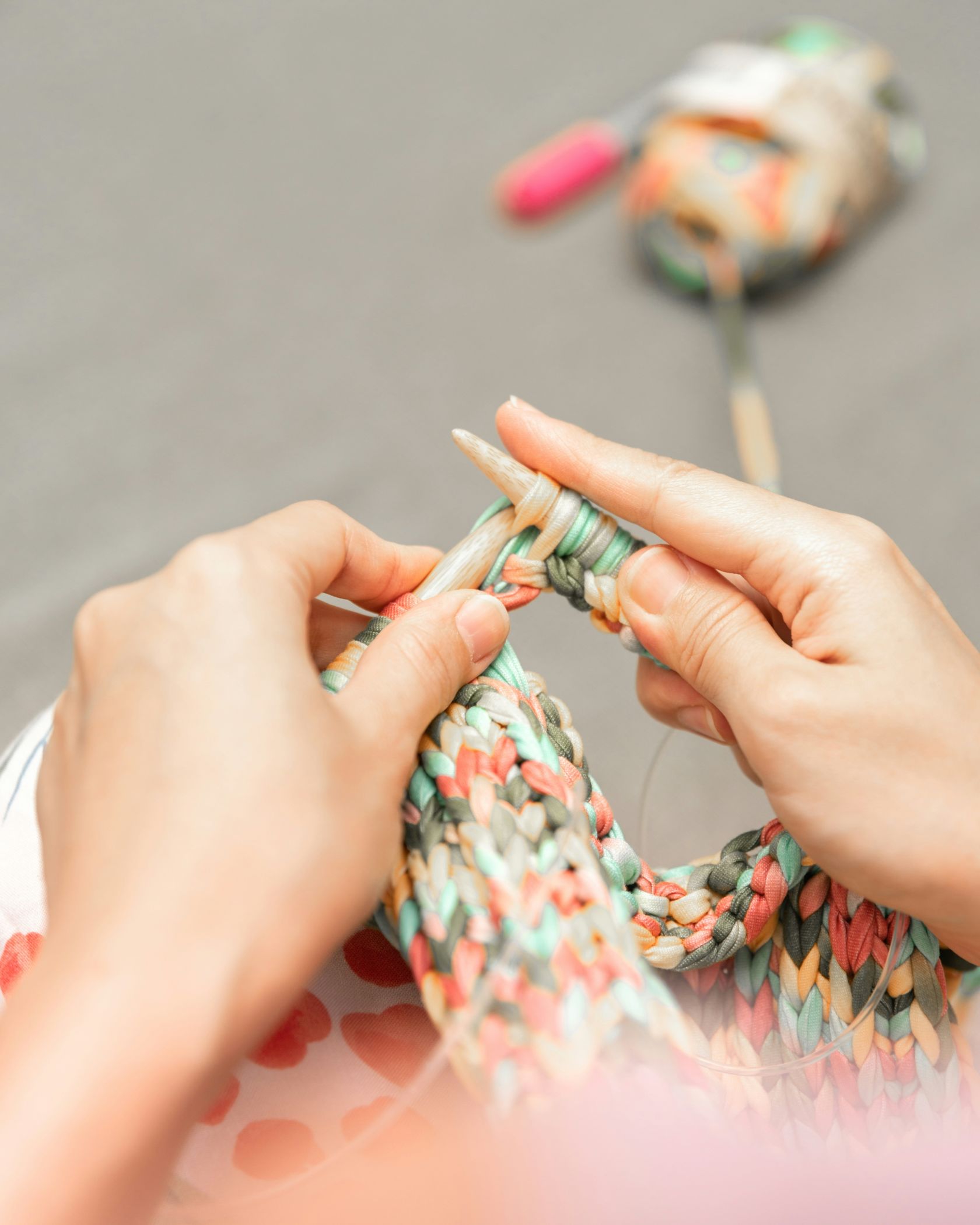
Sometimes for dinner. But often for work
A jar of bone broth is settling beside the sink. Dog supplements are measured into small brown pouches. Bars of dish soap are curing on a rack near an open window. A woman stirring something on the hob while explaining how she learned to read ingredient labels during a rainy winter. Another is weighing herbs in careful silence while her children finish homework in the next room.
Individually, each of these visits became a short feature. A reel. A photograph of hands at work. What I began to notice, though, was less about the products and more about the pattern forming behind them.
Something small yet steady is happening in these Portuguese homes.
These are not start-ups in the glossy sense. No rented offices, no pitch decks. They usually begin with a question. How do I feed my dog better? How do I clean my house without the chemical smell? How do I use my training in nutrition or herbalism without commuting to Lisbon? The answer often starts in a kitchen.
Culture of the making
Portugal has always had a culture of making. Preserves in late summer. Soap in the countryside. Bread passed between neighbours. What feels different now is who is doing it and why. Many of the women I’ve met are foreign. Some arrived for a partner’s job. Others for the light, the pace, the schools. They carry professional histories with them: corporate roles, creative careers, years in cities that move faster than this coast. When they land here, the internal speed shifts. There is space to look more closely at daily life and how one’s time is spent.
Dog toppers
The space that comes with relocating can be unsettling. It can also be clarifying.
One woman described her breakdown. After her own pet struggled with digestion, she began making dog toppers. She speaks about it now with a calmness that feels hard-won.
She spent evenings reading veterinary studies, adjusting recipes, and asking local butchers for offcuts. What started as care became stockpiles in her freezer, then labelled packages for friends. Orders came through WhatsApp, then Instagram. Now she delivers to doorsteps across the Algarve, promising her dog a longer, healthier life and extending that promise to others. When she speaks about her business, she rarely uses the word business. She talks about responsibility.
Dishwashing tablets
The dishwashing tablets were born from irritation and an increase in questioning personal health decisions. The smell, the plastic wrapping, the sense of buying something without knowing what it contains. Their maker keeps a notebook filled with ratios. She tests batches on her own plates first. Her husband jokes that the kitchen looks like a school science lab. She shrugs and carries on.
Cost of living
On the surface, these are small ventures. A few hundred euros a month. Sometimes less. Sometimes born from trade. They are not meant to replace a salary from London or New York. They fit around school runs, padel lessons, and the bureaucracy of residency cards. Yet when you sit long enough at those tables, you realise they are not marginal. They are responses.
Responses to the cost of living are creeping up quietly. Responses to the feeling of being slightly unmoored in a new country. Sometimes they are responses to a recent separation or divorce. Responses to the gap between what we once did and what our days now look like. In Portugal, where salaries remain lower than in much of northern Europe, side incomes are common among locals too. Translation work in the evenings. Rental properties in the family. A second job during the summer. The foreign women I’ve met are stepping into that same pattern, though from a different starting point.
There is also something psychological in it.
Move countries
When you move countries, you lose the friction and pace that once defined you. The commute, the office politics, the noise. What remains can feel both peaceful and hollow. Making something tangible restores a sense of weight. A product in your hand. A label with your name on it. A customer who sends a message saying it worked.
None of the women I’ve interviewed talks about scale. They talk about repeat orders. About sourcing locally when possible. About packaging that does not feel wasteful or that is reused. There is care in those decisions. Care that reflects a broader shift I notice among families here: less appetite for excess, more attention to ingredients, materials, and origin.
Connecting with the community
Portugal lends itself to that rhythm. The markets in Loulé. The slower mornings. The fact that you can speak to the person who raised the chickens or pressed the olives. It encourages proximity. When you live closer to production, it is harder to remain abstract about what you consume.
What interests me most is how quietly these microeconomies operate. No press releases. Often no formal launch. A neighbour mentions it at school pick-up. A friend tags someone in a local Facebook group. A reel circulates. The growth is modest and relational.
During months of reporting on them, I have begun to see them as a form of integration. Not assimilation in the dramatic sense, but participation. A foreigner who begins selling homemade broth is not only earning money. She is entering local supply chains, learning Portuguese labels, and negotiating with shop owners. She becomes part of the everyday system here.
There is vulnerability in it, too. Income that depends on word-of-mouth. Regulations that can feel unclear. The quiet worry about tax authorities or whether something should remain a hobby. These tensions sit alongside the pride.
When I leave those kitchen tables, I often carry a small parcel home. Dog treats. Soap. A jar of something carefully sealed. What stays with me, though, is the atmosphere. The steadiness. The sense that large economic headlines rarely capture the real adjustments happening underneath.
Portugal is changing, as most places do. Slowly. In housing, in demographics, in who chooses to build a life here. The clearest signs are not visible on a skyline. Sometimes they are measured in teaspoons and glass jars.
If you look closely at the local kitchen tables, you can see it.