























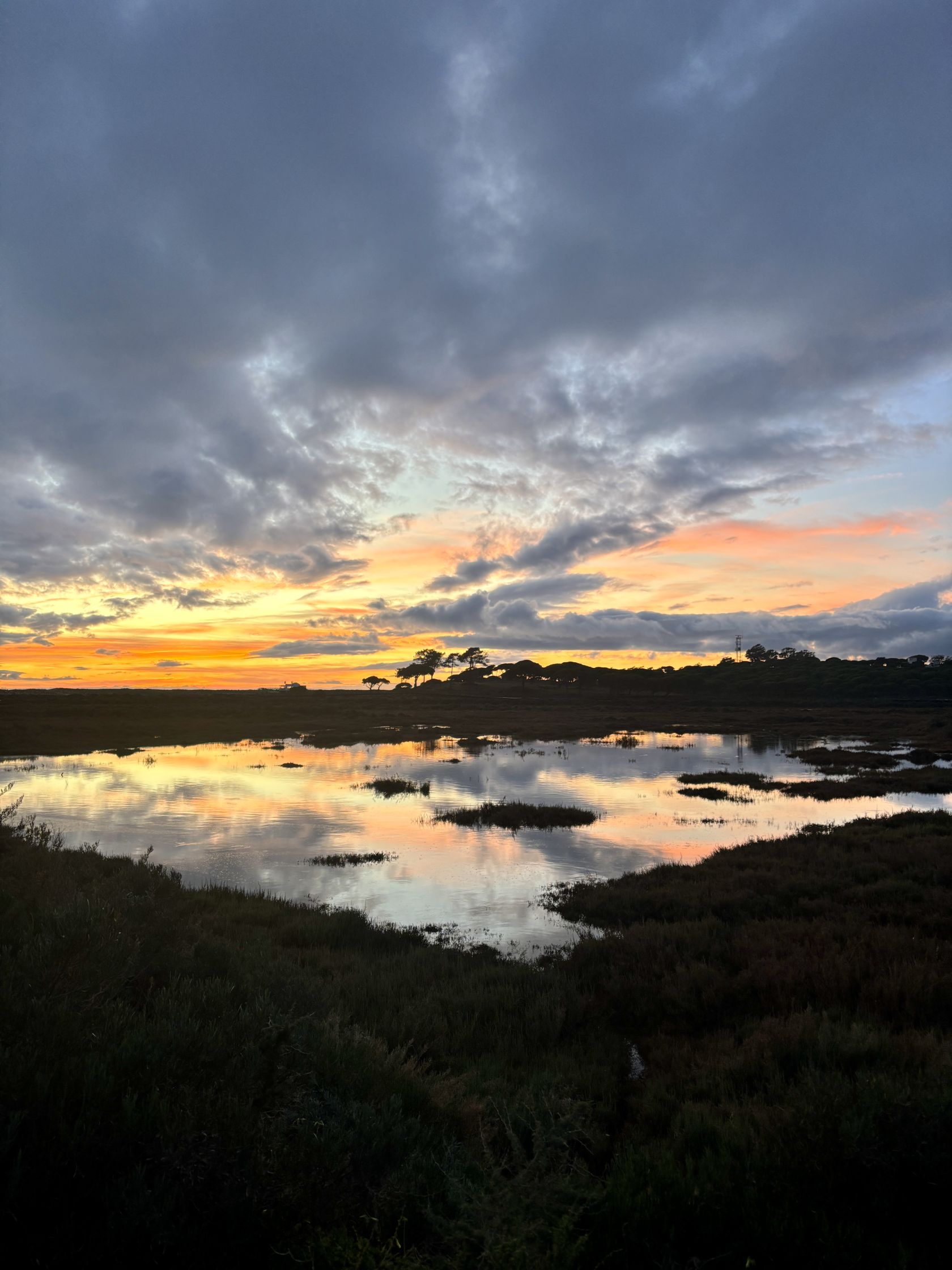
What appears continuous from a car suddenly breaks into distinctly divided settings once walking slows the pace. Coastline separates into geology and access points. Inland villages reveal differences that disappear at speed. Walking alters not just what you see, but how the region makes sense.
The most revealing routes are not always the easiest or the most photographed. They tend to sit between coast and interior, between visitor infrastructure and working landscape, between difficult terrain that demands effort and places where slowness rewards attention. These three walks reflect that range.
Falésia Cliffs: Coastal Terrain That Requires Commitment
The clifftop paths above Falésia Beach run for miles and deliver the magnificent scale and beauty the Algarve coastline is known for. Access begins near Rocha Baixinha, where paths rise from beach level and follow the cliff edge. From there, routes head west toward Albufeira and, depending on distance and stamina, further toward Pine Cliffs.
This is the most demanding of the three walks. The trails are informal, shaped by repeated use rather than strict maintenance. Some sections follow level ground close to the cliff edge. Others move inland where elevation shifts become steeper. Descents, particularly after dry periods, require care.
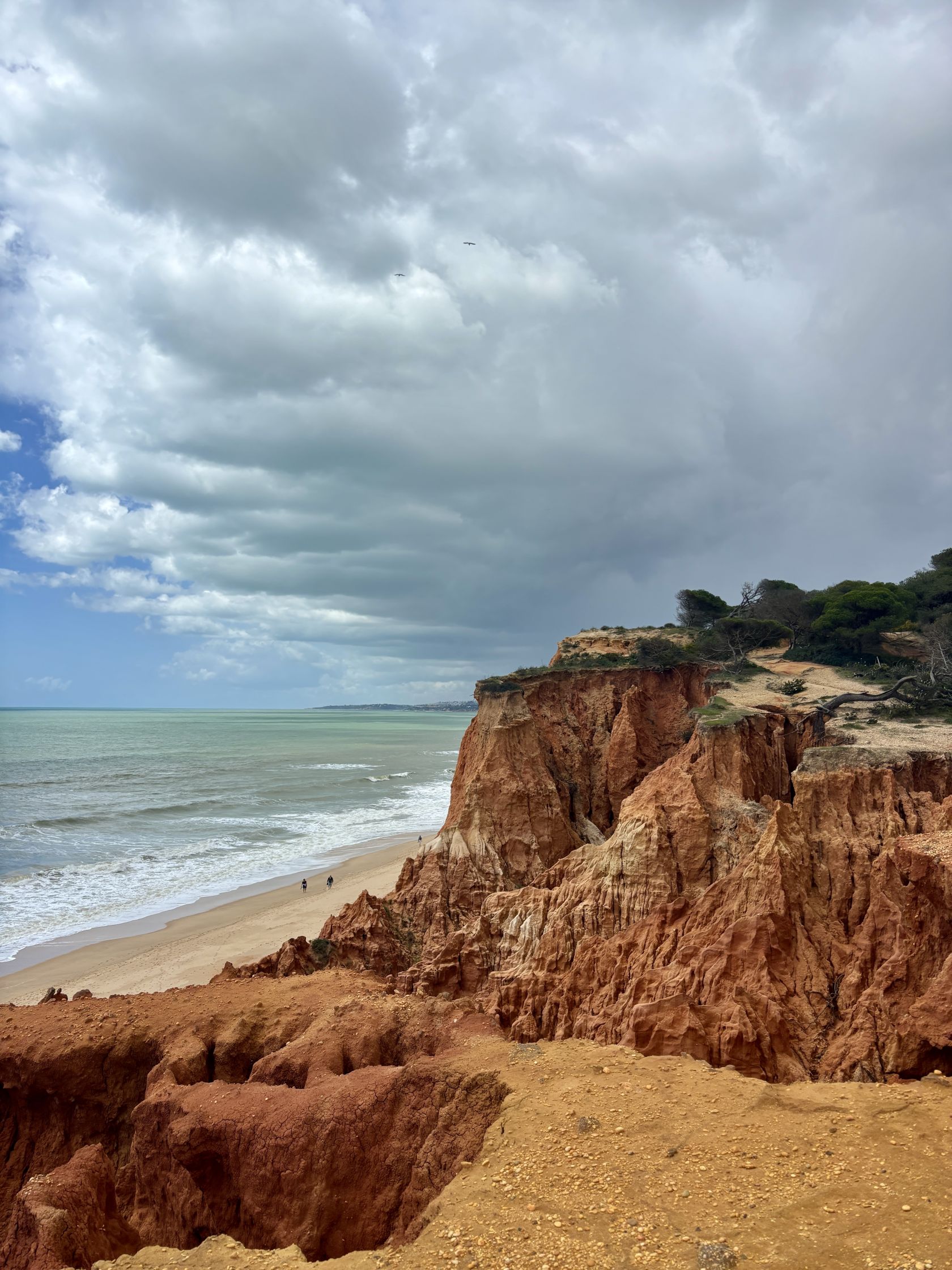
Signage exists but is inconsistent. Most walkers choose a path and continue, knowing that routes generally reconnect. On clear days, views stretch far out to sea. When haze rolls in, the cliffs themselves take over, their famous layered red and orange sediment holds magnificence even without the horizon.
Heat matters here. Summer midday conditions make the route punishing. Early morning, late afternoon, or winter months are more workable, though wind becomes a factor outside peak season.
Caminho do Ludo: Wetland Systems at Walking Speed
The Caminho do Ludo links Quinta do Lago to Faro Beach across seven kilometres of the Ria Formosa forest and lagoon. The route stays flat, alternating between boardwalk and wide dirt paths, and is widely used by walkers and cyclists.
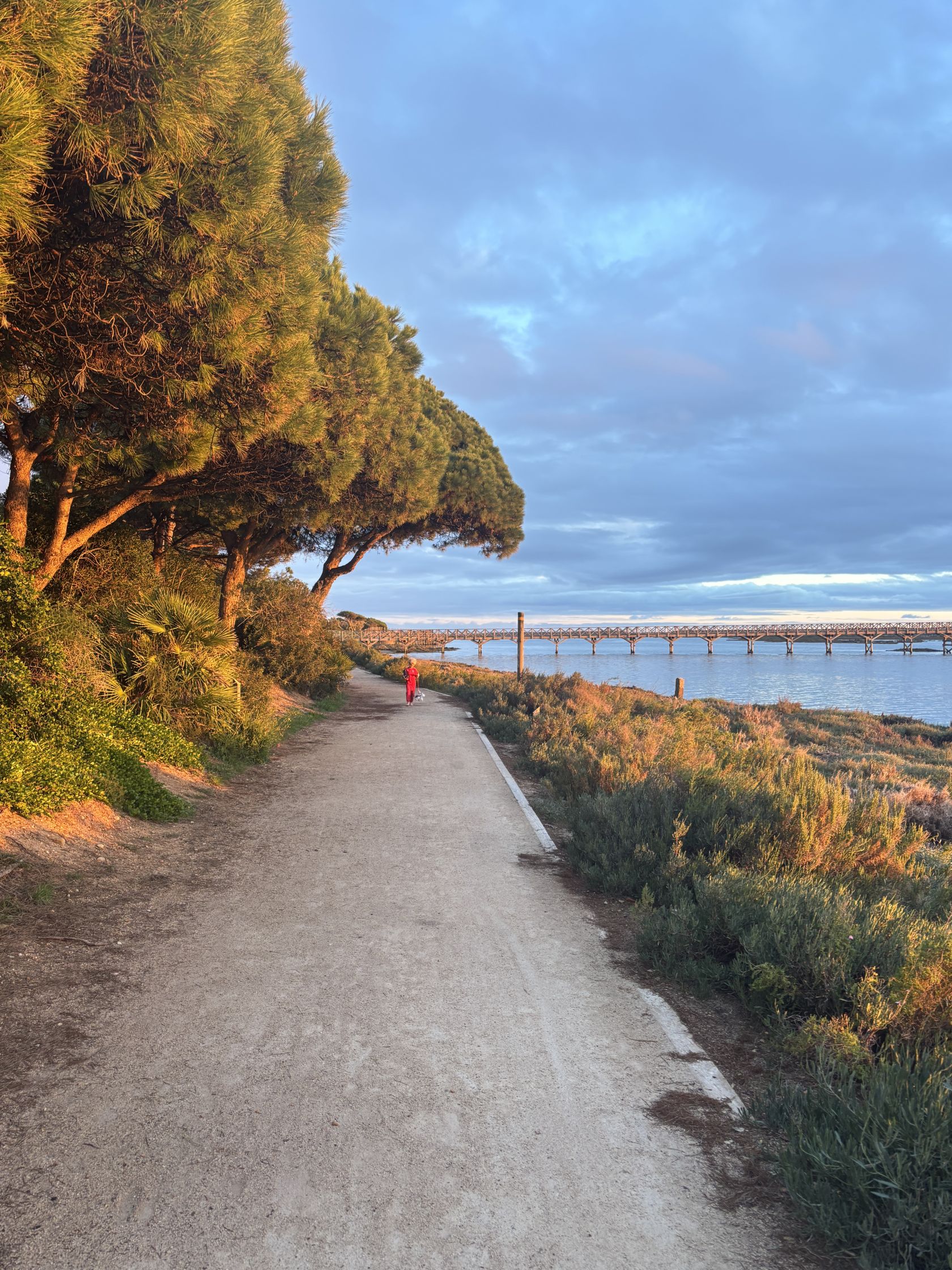
This trail reveals the Algarve’s wetland ecology. Running parallel to São Lourenço Golf Course, it passes Roman fish-salting tank ruins set just off the main path. The structures are modest and easy to miss, but they mark an industry that once shaped this coastline.
On the route to Faro, the route opens into a bird habitat. Flamingos appear regularly in shallow water, and a bird hide offers shelter for longer observation. The landscape stays low and wide, with long sight lines across the lagoon and visible tidal shifts. Interest comes from watching how the system operates rather than from physical challenge.
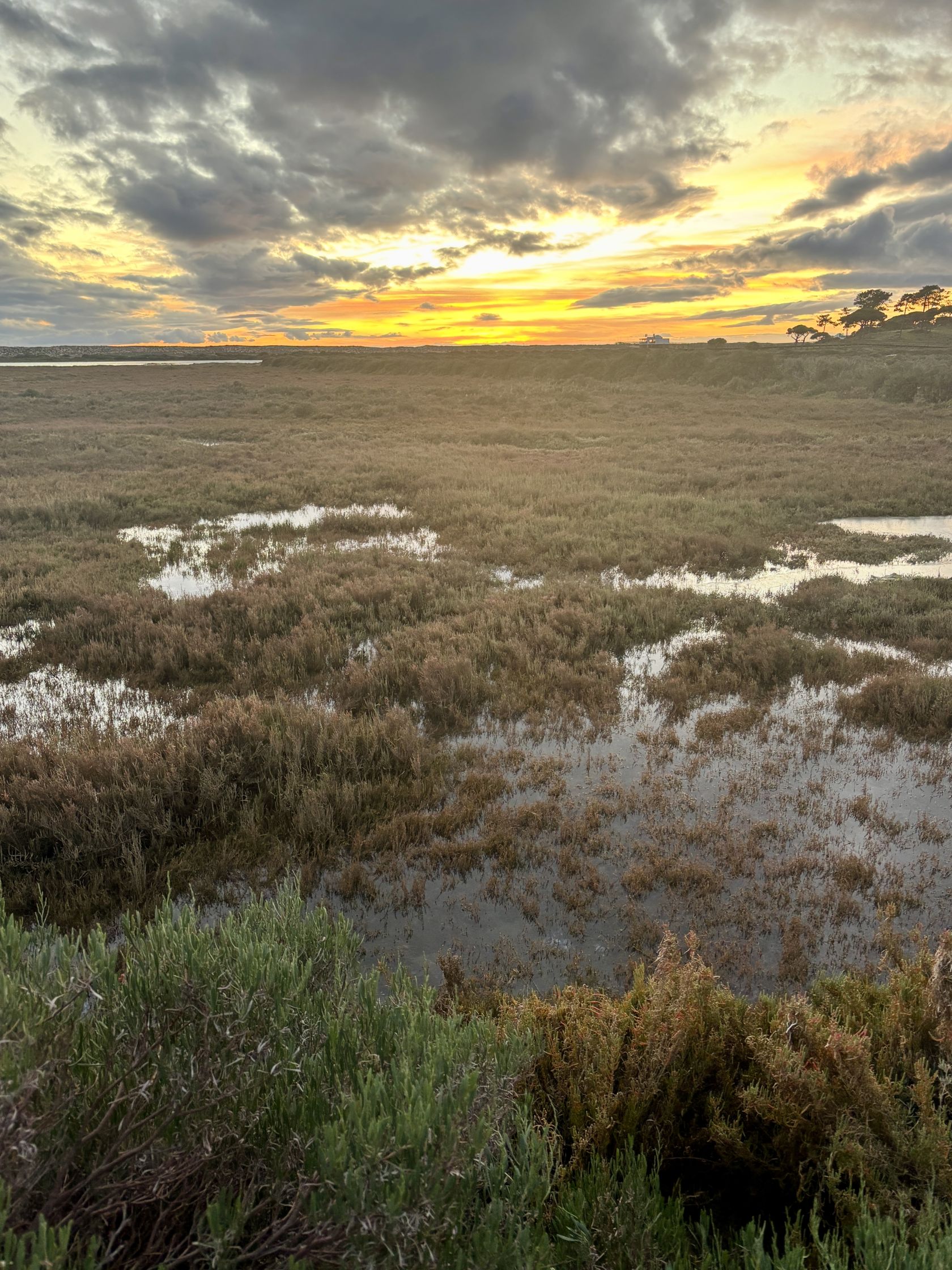
In summer, the trail connects to beach restaurants and rented sunbeds. Outside peak season, it feels more utilitarian, used for exercise, commuting, and routine movement rather than leisure.
Alte: Springs and Inland Rhythm
Alte sits away from the coastal corridor, and walking here centres on the village’s natural springs, Fonte Pequena and Fonte Grande. These water sources have supplied the area for generations and continue to shape daily life.
Historically, the springs functioned as communal gathering points and working spaces. Water flows steadily through channels that feed surrounding land. Today, the area serves both residents and visitors. In warmer months, children use the shallow pools for swimming, especially after seasonal rains.
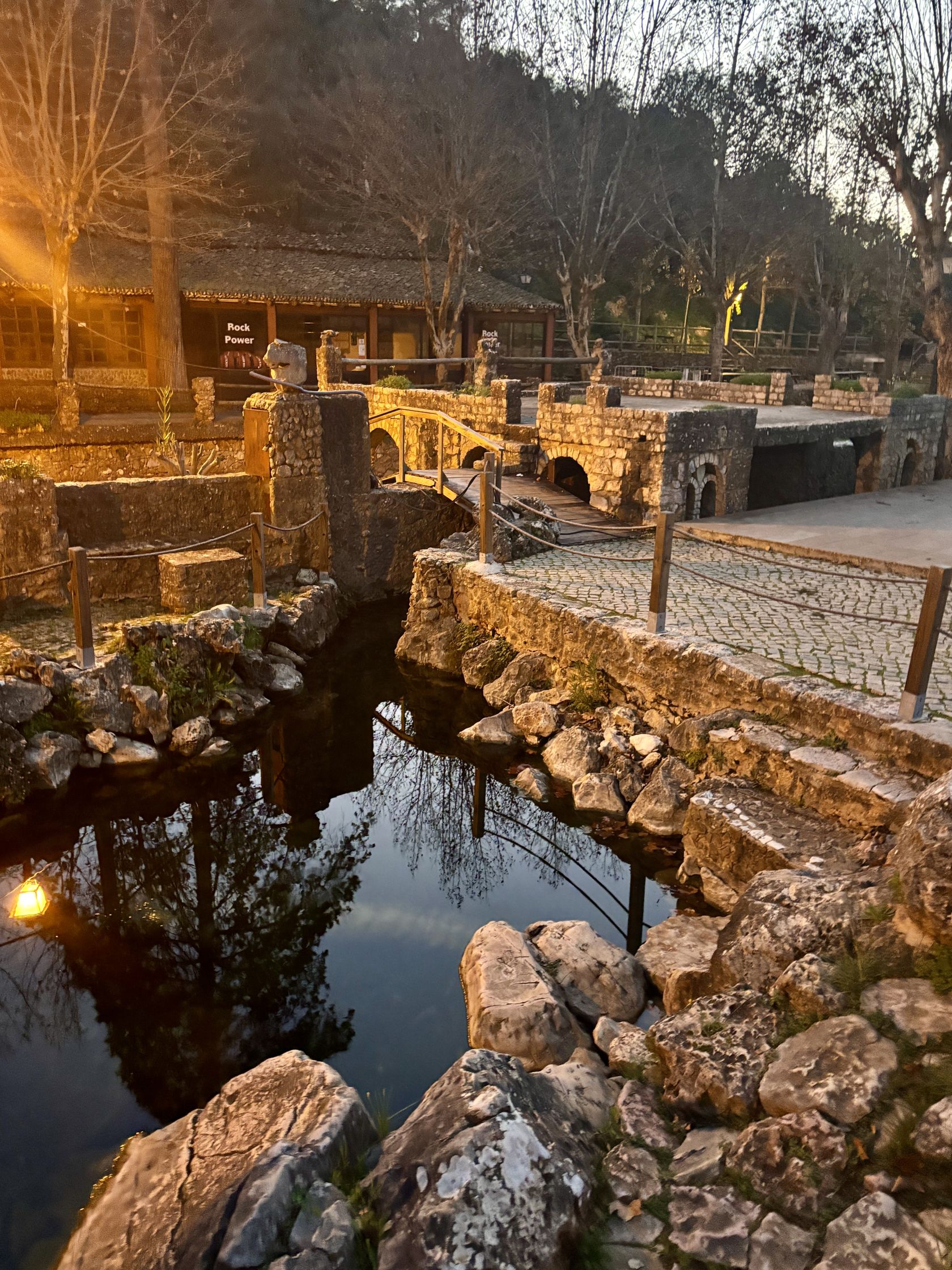
The springs sit within a maintained public space rather than an untouched landscape. Nearby references to local history reflect the area’s broader civic identity, including links to Duarte Pacheco, the Algarve-born engineer whose public works shaped infrastructure across Portugal and whose memorial stands in his hometown of Loulé. The setting remains practical and lived-in, used by locals as much as it is noticed by visitors.
Walking in Alte involves more elevation than the coastal or lagoon routes. Streets slope and curve through hillside terrain, creating a different athletic rhythm. The effort remains manageable, but the contrast with flat coastal walking is clear.
What Alte offers is context. This is an inland Algarve shaped by water access and agriculture rather than beach proximity. Its pace and priorities differ from the coast.
Practical Considerations
Walking in the Algarve requires attention to heat, particularly between June and September. Coastal routes benefit from the breeze. Inland routes do not. Water, sun protection, and timing matter.
Each of these walks shows a different aspect of the region. Falésia reflects the coastline’s physical demands and beauty. Caminho do Ludo reveals the lagoon systems that define the Algarve. Alte offers insight into life in an inland village. Together, they form a fuller picture than any single route can provide.