























Children worldwide are often curious about where babies come from, and in this enlightened age, open-minded parents probably take a deep breath and tell the truth.
However, if not ready for the ‘birds and bees’ story, embarrassed parents have been known to resort to the tale that ‘storks bring them’, and this myth is carried forward by images of storks carrying infants in blankets on baby cards, and probably stems from ancient myths and legends that say storks nesting on the roof of a home were believed to bring good luck.
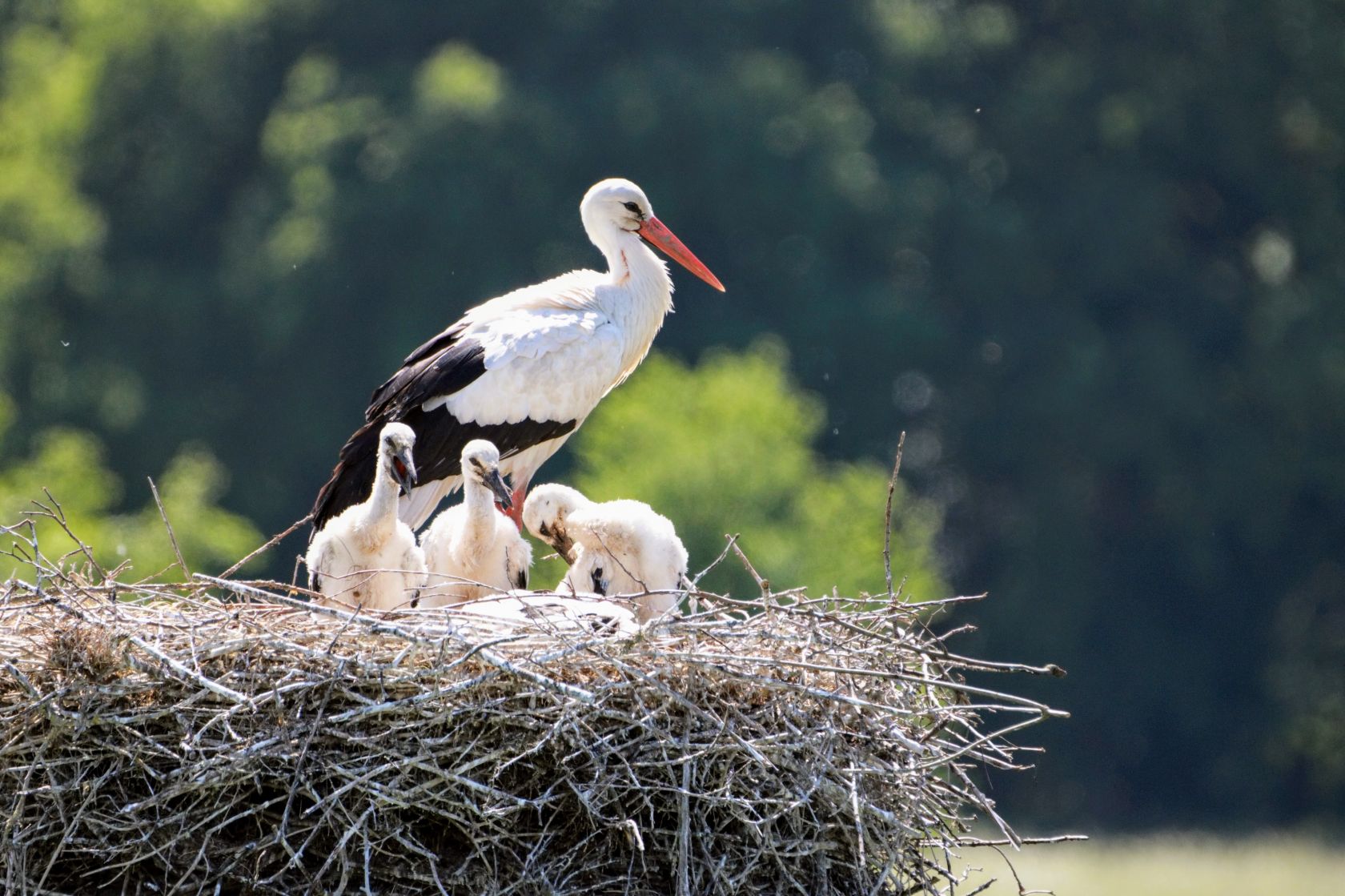
White Storks, officially named as Ciconia Cinona, or known locally as Cegonha branca, are one of the most distinctive and easily recognisable birds in Portugal, seeming to be the harbinger of the start of summer here. Most of these large graceful birds return to the same nest every year after their winter break in central Africa, but more and more are choosing to hang out by landfills year-round in search of a scavenged ‘free lunch’, and do not migrate at all.
Colour Scheme
These massive birds stand around 125cm tall with a wingspan of around 215cm. Covered in white feathers, except for the primary black feathers on their wings, they have long, sharp bills and slender legs, both red. They are said to partner for life, and are unable to ‘sing’ or even croak, having no voice organ, but may grunt or hiss, and communicate with each other with a lot of bill-clacking - a sound not dissimilar to a child’s toy machine gun – and the noise is resonated by a pouch in their throats. Whether it be a greeting or a display of threat, their neck and head dances are a spectacle to watch.
Giant Nests
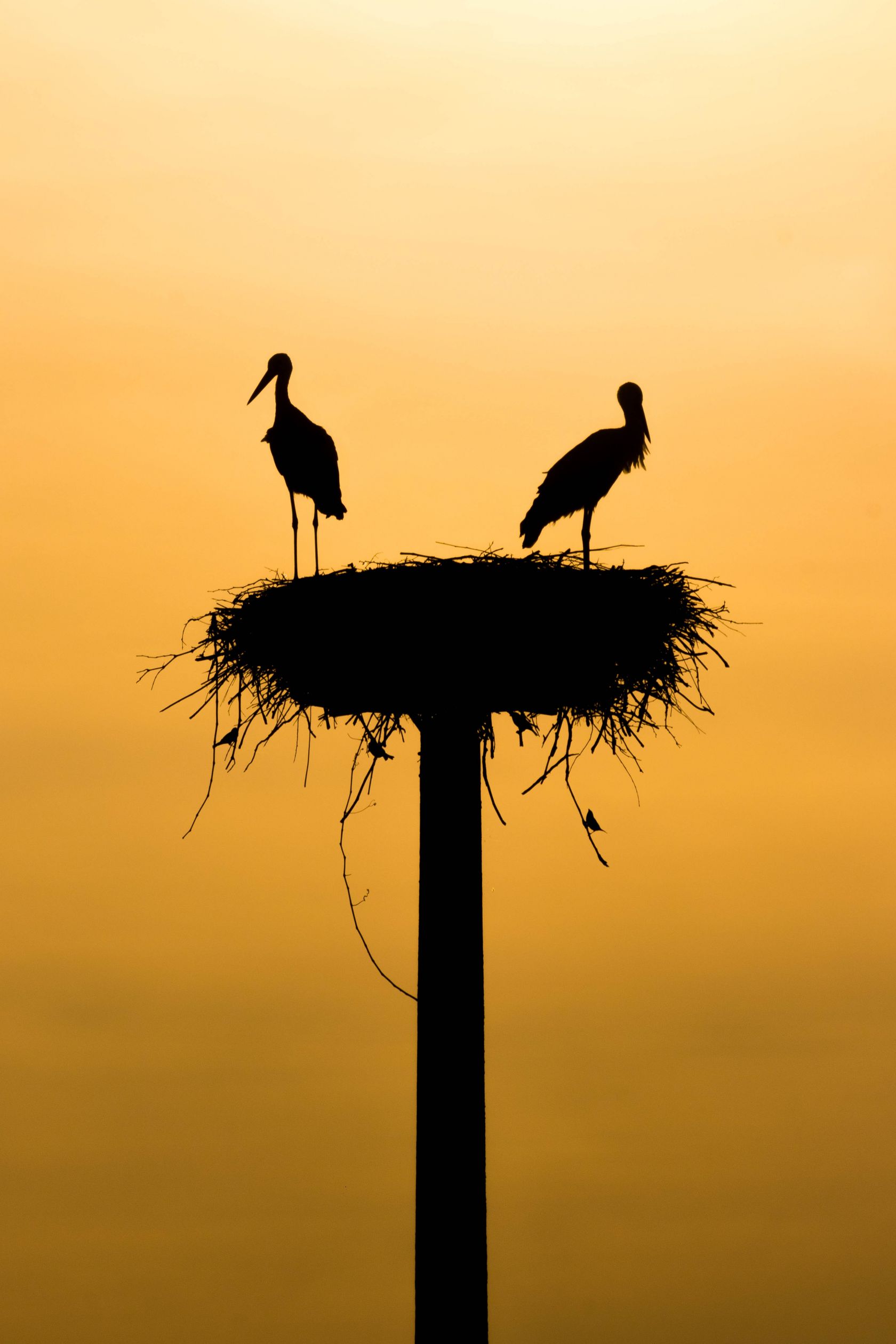
The nests are huge – looking like a bundle of firewood, but is a great heap of carefully arranged sticks built on any high structure, be it on electricity pylons or street lamps, with the lower parts of their nests commonly providing homes for smaller birds. These huge nests are protected by law in Portugal and approval is required to remove them - even if they are empty - so hard luck if they choose to nest on your chimney!
A breeding pair can lay a brood of up to four eggs, and the chicks are constantly guarded by one of the parents. They are carnivores with a natural diet consisting of insects, fish, amphibians, even small mammals or birds, and the young are fed a diet of regurgitated food from both parents. They consume up to 60% of their own weight in food every day until the age of 9 weeks, when they are ready to leave the nest.
Happily, they were evaluated by the IUCN Red List of Threatened Species as being in the category of ‘Least Concern’, but are continually threatened by loss of habitat, collisions with power lines, use of persistent pesticides, and even illegal hunting on wintering grounds.